Crochet Baby Jumper: A Cozy Handmade Sweater for Little Ones
A handmade Crochet Baby jumper is one of those special projects that combines comfort, practicality, and timeless style. With its softly textured fabric, ribbed details, and elegant shawl collar, this type of baby sweater can become a beautiful addition to a little one’s wardrobe.
The Little Dapper Dude sweater from Crochet Dreamz is designed with a shawl collar and a subtle textured stitch pattern. The original design is worked in worsted-weight yarn and is available in sizes ranging from 0–3 months through 3/4T.
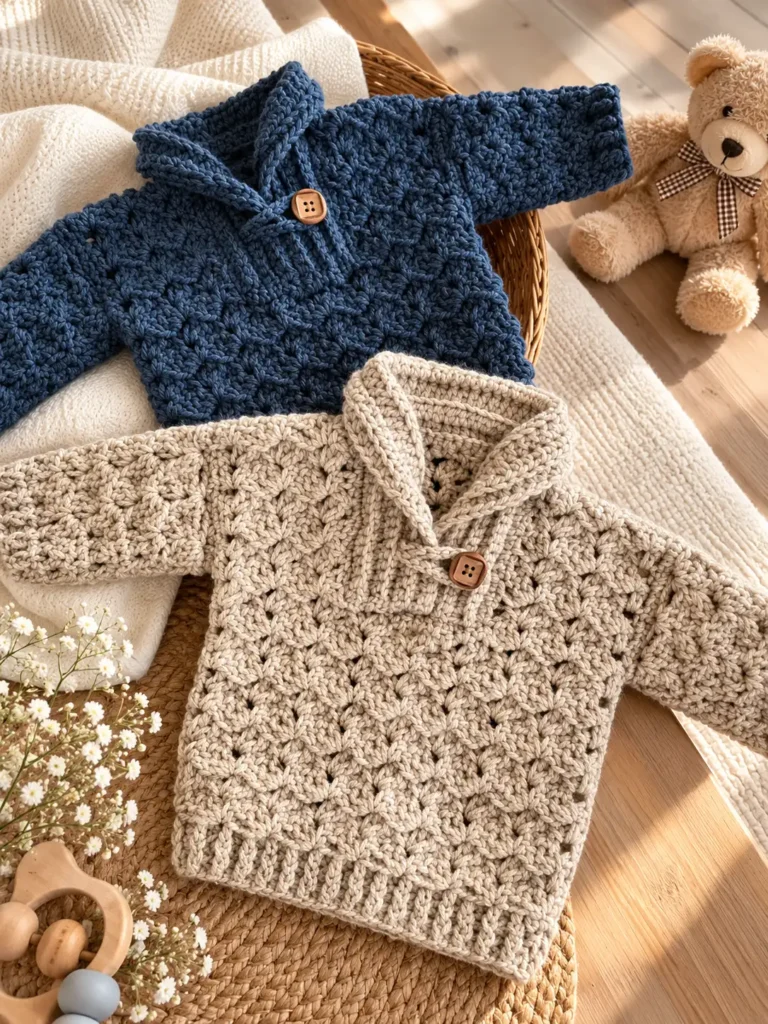
Table of Contents
Why Make a Crochet Baby Jumper?
A Crochet Baby jumper is a rewarding garment project because it lets you practice several useful crochet techniques while creating something wearable.
The construction of this particular jumper is especially interesting. The front and back are made separately and joined at the shoulders. The collar and sleeves are then added before the sides are seamed. The back panel itself is rectangular, which keeps part of the construction relatively straightforward.
The finished sweater also includes thoughtful details such as a shawl collar, ribbed cuffs and hem, and a single button closure.
Materials for the Crochet Baby Jumper
The source design uses worsted-weight, size 4 yarn. The samples were made with Lion Brand Wool-Ease in Wheat and Denim.
For a similar project, the listed supplies include:
- Worsted-weight size 4 yarn
- H/8 (5 mm) crochet hook for the main sweater
- G/6 (4.5 mm) crochet hook for the ribbed collar and hem
- One 3/4-inch wooden button
- Tapestry needle
- Stitch markers
The designer also notes that hook size can be adjusted when necessary to achieve the required gauge.
Crochet Terminology and Stitches
The original pattern is written using US crochet terminology.
Several familiar stitches and techniques appear in the design, including chain (ch), single crochet (sc), half double crochet (hdc), and double crochet (dc). The project also incorporates decreases, front- and back-post stitches, and back-loop-only crochet.
These techniques contribute to the sweater’s combination of texture and structured ribbing.
Working in the Back Loop Only
Back-loop-only crochet means working into the back loop of a stitch rather than underneath both top loops.
This technique is used in the collar construction and helps produce visible ridges and additional texture. The original instructions specify that later collar rows are worked in the back loops only.
Post Stitches for Ribbing
Front- and back-post stitches are used to create the ribbed appearance seen around areas such as the cuffs and bottom edge.
Alternating post stitches creates raised vertical lines that resemble the ribbing commonly found on knitted sweaters. Besides being decorative, this treatment gives the edges of a Crochet Baby garment a more finished appearance.
Gauge Matters for a Crochet Baby Sweater
Gauge is especially important when crocheting clothing. A small difference in stitch or row size can noticeably change the dimensions of a baby garment.
For this design, the specified gauge is:
4 pattern repeats and 8 rows = 4 inches square.
Making a gauge swatch before beginning the garment can help determine whether a different hook size is necessary.
Crochet Baby Jumper Sizes
The jumper is designed with approximately 3 to 4 inches of positive ease. Its published finished measurements cover several baby and toddler sizes.
| Size | Finished Chest | Finished Length |
|---|---|---|
| 0–3 months | 18 in | 10.5 in |
| 3 months | 20 in | 11 in |
| 6 months | 20 in | 12 in |
| 12–24 months | 22 in | 13 in |
| 2T | 24 in | 14 in |
| 3/4T | 26 in | 15 in |
Because the garment includes positive ease, selecting a size should involve considering both the child’s measurements and the intended amount of room in the finished sweater.
How Much Yarn Is Needed?
The original project uses skeins containing 197 yards each, with the required number increasing according to size.
The published quantities are:
- 0–3 months: 2 skeins
- 3 months: 2 skeins
- 6 months: 2½ skeins
- 12–24 months: 3½ skeins
- 2T: 4 skeins
- 3/4T: 4½ skeins
If substituting another yarn, compare yardage rather than relying only on the number of skeins, since skein sizes vary between yarn brands.
Understanding the Jumper Construction
The Crochet Baby jumper is assembled in stages rather than being crocheted as one seamless piece.
Front and Back Panels
The back begins as a rectangular panel without shaping. The front is also worked from the bottom upward, but shaping is introduced around the shoulders and neckline area.
Once both pieces are ready, the shoulders are joined.
Shawl Collar
One of the defining features of this sweater is its shawl collar.
The collar is added around the front opening and back neckline after the shoulders have been joined. It is worked back and forth, with back-loop-only stitches contributing to its ribbed texture.
The overlapping collar gives the jumper a classic sweater-like appearance while the button and loop provide a simple decorative closure.
Sleeves and Cuffs
Rather than making completely separate sleeves and sewing them into finished armholes, the sleeves are worked from the sweater body between marked points around the shoulder area.
The cuffs are finished with ribbing created using post stitches. This echoes the texture used elsewhere in the garment and gives the sleeves a neat finish.
Side Seams and Bottom Ribbing
After the sleeves and collar have been completed, the sweater is folded with the right side facing inward and seamed from the cuffs toward the bottom edge.
Ribbing is then added around the lower edge to complete the sweater silhouette.
Tips for a Neater Crochet Baby Jumper
Take time to check gauge before beginning the full garment. Baby clothing is small enough that even modest differences in tension can noticeably affect the final dimensions.
Stitch markers are also useful throughout garment construction. They can help identify important positions such as the right side of the fabric, sleeve placement, and collar shaping points.
When joining pieces, align the edges carefully before seaming. A neat seam can make a significant difference in how professionally finished the sweater looks.
Finally, weave in yarn tails securely and inspect the finished garment carefully before it is worn by a baby.
Choosing Yarn for a Crochet Baby Project
When selecting yarn for a Crochet Baby garment, weight is only one consideration. Softness, durability, and care requirements also matter.
The referenced sweater uses a size 4 worsted-weight yarn, so substitutions should begin with yarn in a comparable weight category. Because different fibers and yarn constructions can behave differently, a gauge swatch remains important even when the replacement yarn carries the same weight classification.
For frequently worn baby clothes, choosing yarn that can tolerate regular washing may also make the finished garment easier to maintain.
A Handmade Jumper with Classic Details
A Crochet Baby jumper with a shawl collar is a lovely way to explore garment construction on a manageable scale. The combination of textured crochet, ribbed edges, shaped shoulders, sleeves, and a buttoned collar offers several techniques within one cohesive project.
The design is particularly appealing because its decorative details are also functional. The textured body gives the sweater character, while the ribbed collar, cuffs, and hem create a polished finish.
Whether made in a soft neutral shade, classic blue, or another baby-friendly color, this style of jumper can become a charming handmade piece for a little one.
Conclusion
A Crochet Baby jumper is a charming handmade project that combines practical garment construction with classic details. The textured fabric, shawl collar, ribbed edges, sleeves, and wooden button give the finished sweater a cozy and polished appearance.
Careful gauge checking, consistent tension, and neat finishing can make a noticeable difference when creating a baby garment. With its worsted-weight yarn and structured construction, this jumper also offers an opportunity to practice several useful crochet techniques while making a comfortable piece for a baby or toddler.
Frequently Asked Questions
Is this Crochet Baby jumper suitable for beginners?
The project uses several techniques, including basic crochet stitches, decreases, post stitches, back-loop-only crochet, garment assembly, and shaping. A crocheter who is already comfortable with basic stitches and following garment instructions may find these techniques easier to manage.
What crochet terminology does the project use?
The referenced pattern uses US crochet terminology. This is important when following the instructions because stitch names can have different meanings in US and UK terminology.
Can I substitute a different yarn for this Crochet Baby jumper?
Yes, but the substitute should be appropriate for the project and capable of achieving the required gauge. The original design uses worsted-weight, size 4 yarn. Always make a gauge swatch when changing yarn because fibers and yarn constructions can produce different results.
Why is checking gauge important for a baby sweater?
Gauge helps ensure that the finished garment matches the intended dimensions. Even small differences in stitch size can affect the overall fit of a baby sweater, so checking gauge before beginning the main pieces can prevent sizing problems later.
Leave a Reply