Winter Crochet Ideas: Adorable Peyton the Polar Bear Inspiration
Looking for winter crochet ideas with a playful Arctic theme? Peyton the Polar Bear is an amigurumi doll project highlighted by WoolPatterns, offering inspiration for anyone who loves handmade animal toys and seasonal crochet displays. This guide explores what to consider before making the bear and directs you to the original pattern rather than reproducing the designer’s instructions.
Illustration note: The original designer’s photograph is not reproduced here; please see the linked pattern source for the authentic project images.
- Peyton the Polar Bear: Winter Amigurumi Inspiration
- What to Check Before Starting the Pattern
- Materials and Tools to Prepare
- US Crochet Techniques to Review
- Planning the Construction and Finishing
- More Winter Crochet Ideas
- Where to Find the Original Peyton Pattern
- Conclusion
- Frequently Asked Questions
- Is this the complete Peyton the Polar Bear crochet pattern?
- What does amigurumi mean?
- Which US crochet abbreviations should I know?
- Can I substitute yarn for a polar bear amigurumi?
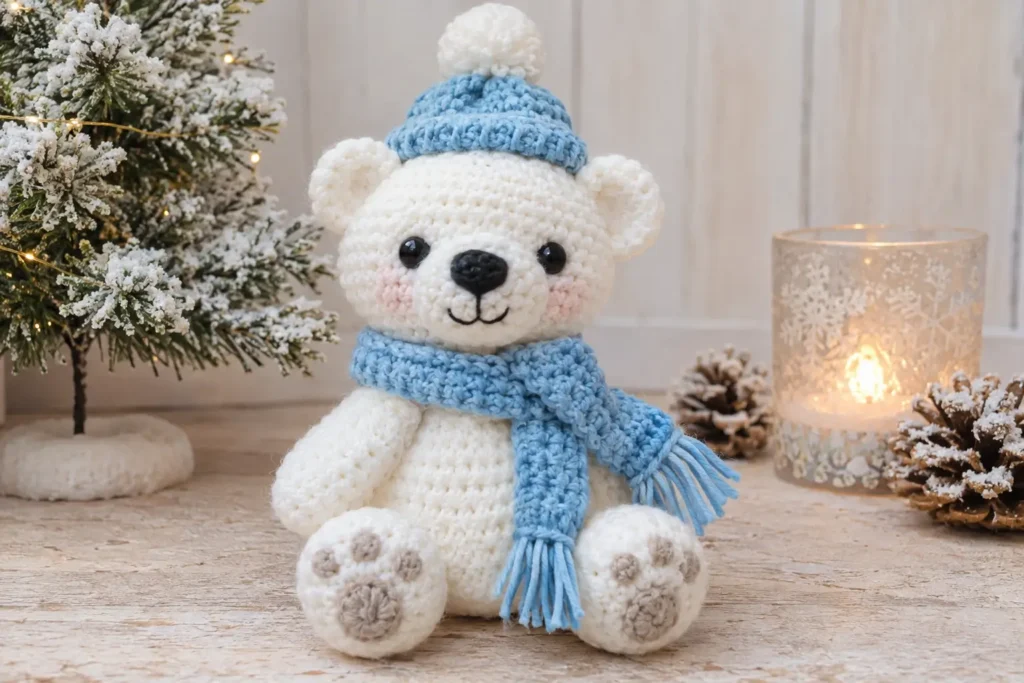
Peyton the Polar Bear: Winter Amigurumi Inspiration
Peyton is a polar-bear-themed amigurumi doll, a charming direction for winter crocheting when you want something different from hats and scarves. The reference is an inspiration and pattern-discovery page. This article is a project overview, not a replacement for the original instructions.
Because the complete technical specifications could not be independently confirmed from the accessible reference, check the designer’s pattern for exact yarn, hook, gauge, size and round-by-round directions before you start.
What to Check Before Starting the Pattern
Start by checking the original designer’s materials list, finished measurements, skill recommendation and any note about US versus UK crochet terms. Follow the pattern’s stated sequence rather than assuming that its components are all made in continuous rounds.
In amigurumi, even small changes in hook size, yarn thickness or stuffing can affect the silhouette. If the pattern specifies a particular gauge or fabric firmness, use that guidance instead of guessing.
Materials and Tools to Prepare
Use the authentic pattern as your shopping checklist. For a typical stuffed crochet animal, the following tools are worth checking against the designer’s list; they are general preparation suggestions, not verified Peyton-specific requirements.
- Yarn in the fiber, weight, color and quantity specified by the designer.
- The specified crochet hook in millimeters.
- A yarn needle for weaving ends or attaching pieces, if the pattern requires assembly.
- Stitch markers and scissors for tracking rounds and finishing.
- Toy stuffing and any face details specified by the pattern, selected with the intended recipient’s safety in mind.
US Crochet Techniques to Review
This overview uses US crochet terminology. Before following the original directions, verify the terms used there. Common amigurumi abbreviations include sc (single crochet), inc (increase), dec (decrease), st (stitch), sl st (slip stitch) and rnd (round). This is a general glossary, not a confirmed stitch list for Peyton.
A magic ring is often used to begin enclosed crochet shapes, while invisible decreases can help keep shaping tidy. Whether those techniques appear in Peyton must be checked in the designer’s actual instructions. Mark the beginning of each round if instructed, and distinguish joined rounds from spirals; the two approaches cannot be interchanged without care.
Planning the Construction and Finishing
Before crocheting, identify which components are worked separately and where any sewing or facial detailing belongs. If the pattern includes assembly diagrams or photos, use those to align the pieces. Add stuffing gradually and follow the specified shaping so the finished bear retains the intended proportions.
For a toy intended for a young child, consider embroidered facial features rather than detachable components when suitable, and follow applicable toy-safety guidance. Check the yarn label for washing instructions. Do not assume blocking is needed for a stuffed amigurumi animal.
More Winter Crochet Ideas
Want more seasonal projects? Browse our winter snowflake coasters for a tabletop idea, or explore the twisted winter ear warmer for something wearable. For another stuffed-animal direction, see our crochet teddy inspiration.
Where to Find the Original Peyton Pattern
Find the reference and follow its attribution to the original designer: Peyton the Polar Bear amigurumi doll on WoolPatterns. Read the designer’s original instructions there or through its credited pattern link for the actual specifications, stitch counts and assembly directions. The reference may change over time.
Conclusion
Peyton brings a polar-bear motif to a collection of winter crochet ideas. The best way to keep the character’s proportions and details faithful is to start with the credited designer’s instructions, confirm the material specifications and use this overview for preparation and related inspiration.
Frequently Asked Questions
Is this the complete Peyton the Polar Bear crochet pattern?
No. This is an attributed project overview. Use the linked original pattern for the complete authorized instructions.
What does amigurumi mean?
Amigurumi is the craft of making small crocheted or knitted stuffed figures, often animals or characters.
Which US crochet abbreviations should I know?
US sc means single crochet; inc and dec refer to shaping, while rnd indicates a round. Always check the pattern’s own glossary.
Can I substitute yarn for a polar bear amigurumi?
You may be able to substitute yarn of a comparable weight, but doing so can change size and firmness. Check the original material requirements and make a fabric sample when appropriate.
Leave a Reply