
Crochet Winter Table Runners: Beautiful Ideas for Your Home
When the temperature drops and holiday gatherings begin, crochet winter decorations offer a wonderful way to bring warmth, texture, and handmade charm into your home. A crocheted table runner can transform an ordinary dining table into a welcoming seasonal centerpiece, whether you prefer traditional Christmas colors, delicate snowflakes, or understated winter neutrals.
Winter table runners are especially appealing because they combine decorative details with practical versatility. Some feature intricate lace motifs, while others rely on simple stitches and repeating patterns. You can choose a design that complements your existing tableware, experiment with seasonal yarn colors, or create a handmade decoration to enjoy throughout the colder months.
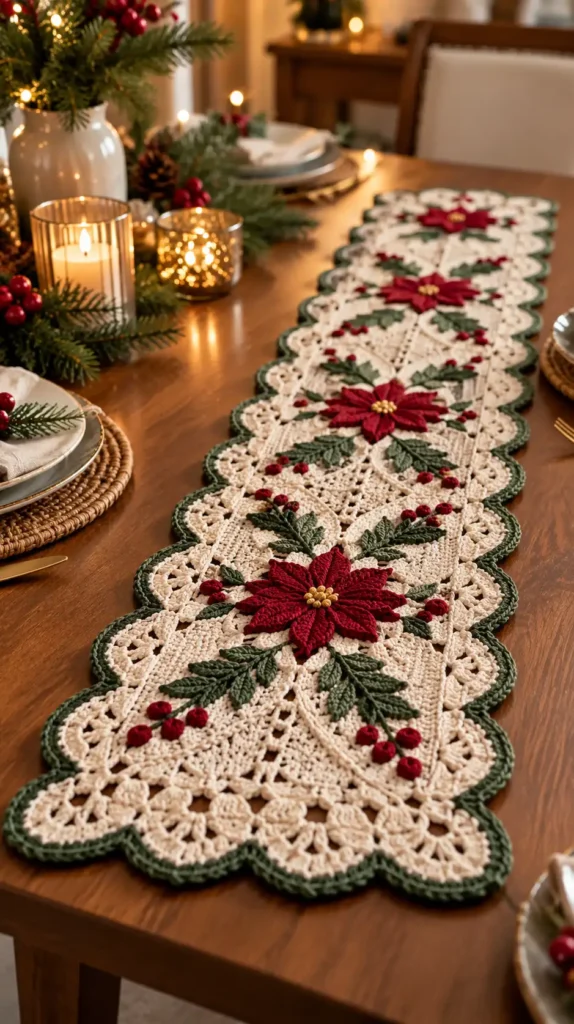
Table of Contents
Crochet Winter Table Runner Ideas to Inspire Your Seasonal Decor
A winter table runner doesn’t have to feature complicated stitches to make an impression. The right combination of yarn, color, and texture can create a beautiful piece that suits your dining space.
The following designs include traditional holiday styles, modern decorative finishes, and customizable motifs. Each offers a different approach to creating a seasonal table accent.
1. Classic Red and White Shell Stitch Table Runner
A red and white shell stitch runner is a timeless choice for Christmas dining tables. Its gently curved stitch pattern creates a textured surface that looks especially attractive when paired with simple white dinnerware or natural wooden furniture.
The featured design uses medium-weight cotton or wool yarn with a 6 mm crochet hook. Its shell pattern consists of groups of five double crochet stitches, producing repeating curves across the fabric.
Rich crimson, burgundy, and bright white are particularly suitable color combinations. Alternating these shades helps emphasize the shell texture without introducing complicated decorative motifs.
The reference suggests a runner length of approximately 60 to 72 inches, depending on the table.
Because the fabric is relatively dense, this style is also a practical choice for anyone who prefers fewer open spaces in their crochet work. Its repeating structure makes it approachable for crocheters who are already comfortable with double crochet stitches.
2. Delicate Snowflake Motif Table Runner
Snowflake motifs capture the quiet beauty of winter and work particularly well in decorative crochet projects. When arranged into a connected table runner, individual snowflakes create an openwork design with a light, delicate appearance.
Unlike a runner worked continuously in rows, this project is assembled from separate hexagonal or star-shaped motifs. Each snowflake incorporates combinations of chain spaces and double crochet clusters.
The source recommends worsted-weight yarn with a 5.5 mm hook for one version, while size 10 crochet thread is presented as an option for a finer finish.
Depending on the chosen arrangement, the referenced designs range from approximately 21.5 to 57 inches in length. The source also mentions yarn requirements exceeding 700 yards for its discussed versions, although the exact amount depends on the specific design.
Individual motifs can be connected with slip stitches, whipstitching, or a join-as-you-go approach, depending on the pattern.
White creates a classic snowy appearance, but pale blue and soft gray can introduce a subtle winter palette. Blocking the completed motifs helps define their points and encourages the connected fabric to lie flat.
For a particularly elegant presentation, place the finished runner over a solid-colored tablecloth so the open spaces between the snowflakes remain visible.
3. Holly Leaf and Berry Crochet Table Runner
Holly-inspired crochet decorations bring a traditional botanical element to holiday table settings. Their recognizable pointed leaves and bright berries create a cheerful contrast against a neutral crocheted background.
The featured crocheted runner measures approximately 14 by 56 inches and uses Aran-weight yarn with a sparkling finish.
Its decorative elements include eight individual holly leaves with picot details that help suggest the distinctive pointed shape of real holly foliage.
Small crocheted berries provide additional dimension, while optional gold beads introduce a subtle festive accent.
The source describes this as an intermediate-level project because it combines a larger fabric base with smaller decorative pieces.
Deep green leaves, red berries, and a cream or ivory background create a familiar Christmas arrangement. For a more understated winter appearance, muted greenery and soft metallic accents can complement neutral tableware.
The raised motifs make this runner particularly attractive as a decorative centerpiece. Positioning them away from frequently used dining areas can also help prevent cups and plates from resting unevenly.
4. Diagonal Stripe Corner-to-Corner Table Runner
Corner-to-corner crochet offers a different way to introduce pattern and movement into a winter table runner.
Rather than building the fabric entirely in horizontal rows, the referenced design develops diagonal sections using clusters of treble crochet stitches and chain spaces.
The resulting texture creates a geometric appearance that works especially well with contrasting colors.
Worsted-weight yarn is suggested for this style, and self-striping yarn can simplify color transitions. Alternatively, separate shades of red, forest green, cream, or white can be arranged into distinct diagonal bands.
The visual impact depends partly on how the colors are distributed. Wide stripes create bold blocks of color, while narrower changes produce a more detailed pattern.
A crocheted border can help unify the edges and provide a finished appearance.
This style is appealing for crocheters who enjoy repetitive stitch combinations but want a result that looks different from a traditional rectangular row-based runner.
The exact stitch placement and shaping should follow a complete corner-to-corner pattern, particularly because the terminology and construction described in the source may differ from other C2C methods.
5. Traditional Green Scalloped Edge Runner
A green table runner with scalloped borders offers a classic decorative look without relying on elaborate central motifs.
The main fabric can be relatively simple, allowing the decorative edging to become the focal point.
The source recommends medium-weight cotton or wool yarn and a 4 mm crochet hook. It describes a body made with basic crochet stitches, followed by a border featuring curved chain-loop details.
This approach is suitable for intermediate crocheters who already understand basic stitch construction and want to develop their edging skills.
Deep evergreen yarn creates a traditional winter atmosphere, while gold or red accents can add seasonal contrast.
Scalloped borders are particularly attractive when the runner extends beyond the ends of a table, allowing the curved edges to remain visible.
Consistent tension matters when working decorative borders. Uneven stitches can cause the fabric to ripple or distort, especially around corners.
Optional beads or sequins may be incorporated for additional decoration, provided they are securely attached and suitable for the runner’s intended use.
6. Reversible Star Motif Holiday Runner
Star motifs introduce a geometric element to winter crochet decorations. Their repeated points create a structured design that can feel both traditional and contemporary.
The featured reversible runner is constructed from six-pointed stars connected during their final rounds.
This joining approach reduces the need to sew every motif together after completing the individual pieces.
The reference describes combinations of double crochet and treble crochet clusters and identifies the project as intermediate-level.
For a delicate appearance, cotton thread with a 4 mm hook is suggested. Medium-weight yarn is another option when a more substantial fabric is preferred.
One of the design’s appealing features is its reversible construction, allowing either side to be displayed.
White stars create a clean winter aesthetic, while combinations of cream, gold, and silver introduce a more festive finish.
Because the overall length depends on the number of motifs, this style can be adapted to different table sizes when the chosen pattern permits additional repeats.
The finished runner can also coordinate with other crocheted table accessories, such as placemats or napkin rings, for a cohesive seasonal setting.
7. Gold and White Crochet Runner With Tassels
For a winter table that favors subtle sparkle over traditional red and green, a gold and white crochet runner offers an attractive alternative.
The featured design combines metallic yarn with textured stitches and tassels at the ends.
The source specifically suggests Red Heart With Love Metallic yarn in cream and gold, with an approximate total yarn weight of 130 to 150 grams and a 4.5 mm crochet hook.
Its decorative fabric uses V stitches or shell-style clusters arranged in repeating sections.
The source describes a four-row repeat, making this an intermediate project with a rhythmic construction.
Metallic fibers reflect surrounding light and can make the stitch texture more noticeable. Cream and gold also coordinate naturally with neutral dishes, glassware, and wooden dining accessories.
Tassels provide a softer finish at both ends of the runner. Their length and fullness influence the overall appearance, so they should complement the size of the completed piece.
The reference mentions a foundation-chain adjustment based on multiples of four, but the complete pattern is needed to determine the correct starting count.
This design is particularly suitable for anyone who wants a festive table decoration that can remain on display beyond Christmas.
8. Beginner-Friendly Double Crochet Table Runner
A simple double crochet runner is an accessible introduction to handmade winter table decorations.
Rather than combining numerous advanced techniques, this style relies primarily on repeated double crochet stitches and occasional chain spaces.
The reference recommends medium-weight cotton yarn with a 4 mm crochet hook. It describes one- or two-row repeating structures that can be continued until the desired length is reached.
A finished length of around 55 inches is mentioned, along with an approximate yarn requirement of 400 to 600 yards for the discussed designs.
These figures are examples from the source rather than universal requirements for every beginner table runner.
The uncomplicated stitch structure makes it easier to focus on maintaining even tension, recognizing stitch placement, and keeping the edges straight.
For a winter-inspired color palette, consider alternating white with deep green, burgundy, or soft gray.
A contrasting border can provide additional definition without changing the central stitch pattern.
Beginners may also appreciate that a repeated stitch arrangement makes it easier to identify mistakes before they become difficult to correct.
Although this is one of the simpler designs in the collection, a complete pattern remains important for determining the correct foundation chain and repeat structure.
9. Mixed Stitch Table Runner With Decorative Fringe
A mixed stitch runner combines several familiar crochet techniques to produce a more varied surface.
Instead of relying on a single repeated texture, the featured style incorporates combinations of single crochet, double crochet, treble crochet, mesh sections, and shell-inspired details.
The arrangement creates contrast between denser fabric and more open decorative areas.
The source suggests sport-weight through worsted-weight yarn, with neutral and metallic shades particularly suited to this design.
Cream, silver, and gold can create an understated winter appearance, while jewel tones offer a richer seasonal alternative.
The referenced dimensions begin at approximately 30 by 82 cm, although the final size depends on the selected design.
Fringe is attached at both ends using folded yarn strands secured with knots.
This finishing detail adds movement and softness, especially when the runner hangs slightly over the table edges.
Blocking is particularly useful for a mixed stitch design because it helps define the different textures and openwork sections.
The result is a decorative runner that showcases a wider range of crochet stitches while maintaining a coordinated overall appearance.
10. Customizable Winter Motif Table Runner
A customizable motif runner is ideal for crocheters who want their finished decoration to reflect the proportions and style of a particular dining table.
The featured concept uses repeated seasonal imagery, including snowflakes, stars, holly leaves, and Christmas trees.
These elements can be incorporated into the fabric through tapestry crochet or created separately and attached as decorative overlays.
The source suggests DK or worsted-weight cotton yarn and discusses adjusting the number and placement of motifs to suit the desired runner length.
It also recommends measuring the table before beginning, using approximately two-thirds of the table’s length as one possible proportion.
This is a design guideline rather than a fixed measurement. The preferred length will depend on whether the runner should remain entirely on the tabletop or extend beyond its edges.
White and soft blue motifs can produce a winter-focused appearance, while red, green, and metallic details create a more explicitly Christmas-themed design.
Optional fringe offers another opportunity to personalize the finished piece.
Because motif placement and stitch repeats vary between patterns, the exact foundation chain and construction details must be established from the selected design rather than estimated.
This flexible approach allows crocheters to create a decorative piece that complements their existing table setting without being restricted to a single seasonal color combination.
Conclusion
Crochet winter table runners offer a creative way to bring handmade texture and seasonal character into the dining room. Whether you prefer the simplicity of double crochet, the delicate appearance of snowflake motifs, or the decorative richness of metallic yarn and fringe, each style has its own appeal.
Beginners can explore straightforward repeating stitches, while more experienced crocheters may enjoy joining motifs, shaping decorative borders, or combining different textures.
The most suitable design will depend on your experience, available materials, preferred colors, and the dimensions of your table.
Leave a Reply