Crochet Granny Squares: Easy Ideas for Beginners and Creative Projects
Crochet granny squares are a wonderful place to begin if you want a project that feels approachable, colorful, and endlessly customizable. Instead of committing to one large piece from the start, you can work on individual motifs and later combine them into blankets, bags, cushions, garments, and decorative accessories.
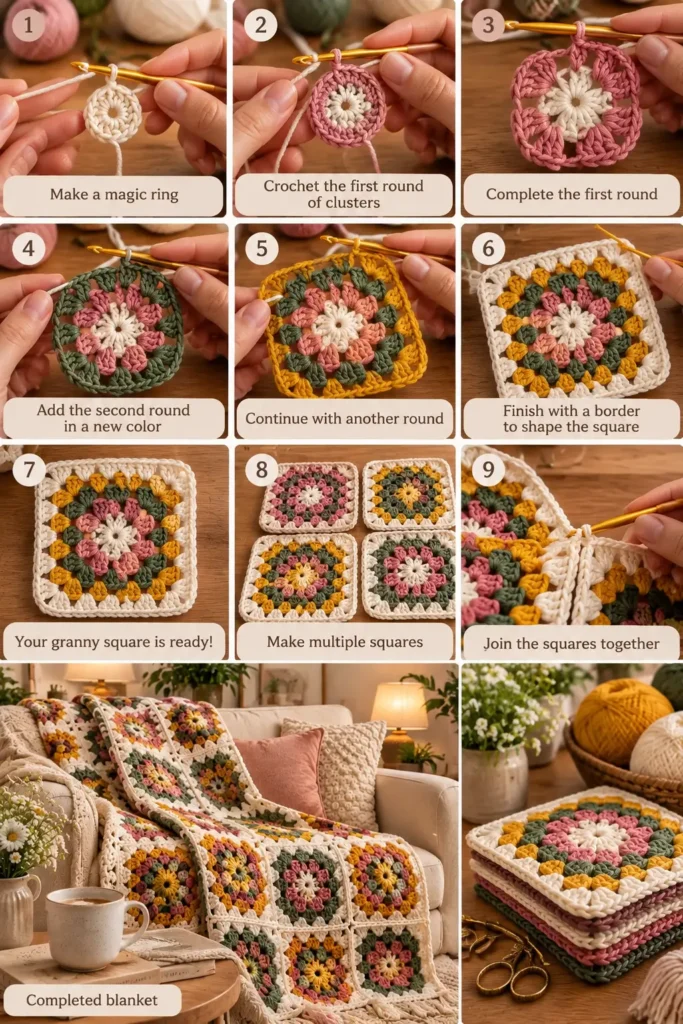
A traditional granny square is generally worked from the center outward in rounds. Classic versions use groups of double crochet stitches separated by chain spaces, while modern designs may introduce flowers, textured stitches, geometric details, creative borders, and multiple colors.
Whether you are discovering crochet for the first time or searching for inspiration for your next handmade project, granny squares offer plenty of room to practice and experiment.
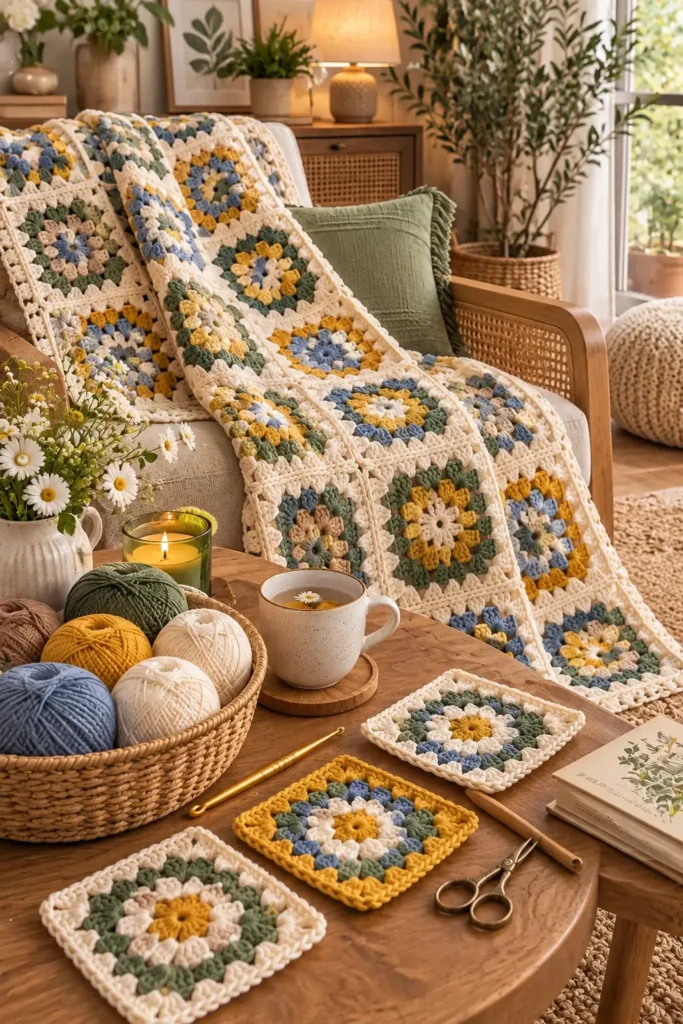
Table of Contents
What Is a Crochet Granny Square?
A granny square is a small crocheted motif typically constructed in rounds, beginning at the center and expanding outward. The corners are formed as the motif grows, creating its recognizable square shape.
The traditional design often features double crochet groups and chain spaces. Modern interpretations can look completely different while following the same general center-out construction. Floral centers, solid sections, textured stitches, contrasting borders, and geometric designs are all possible variations.
The terminology used here follows US crochet terms. In US terminology, a double crochet is abbreviated dc, while a chain is abbreviated ch.
Why Granny Squares Are Excellent for Beginners
Learning crochet through small motifs can feel much less overwhelming than beginning with a full blanket or garment.
A single granny square gives you a manageable space to practice tension, recognize stitches, understand corners, and become comfortable working in rounds. When you make several squares, you can compare them and quickly notice whether your tension is becoming more consistent.
Granny squares are also useful for practicing color changes. Because each round can introduce a different shade, beginners can experiment without needing an elaborate project.
They are particularly useful because they can be:
- Small and manageable
- Made individually before joining
- Used to practice different stitches
- Worked in multiple colors
- Made with compatible leftover yarn
- Combined into larger handmade projects
A simple square with two or three colors is a practical starting point before experimenting with more decorative motifs.
Choosing Yarn and a Crochet Hook
There is no single yarn weight, hook size, gauge, or yarn quantity that works for every granny square project. Those details depend on the particular project you decide to make.
For beginners, a smooth yarn that makes individual stitches easy to see can make learning more comfortable. Cotton and acrylic are both commonly suitable choices, depending on the intended finished item.
When making several matching squares, consistency matters more than choosing one universal hook size. Use the same yarn weight and the same hook for squares that need to match.
Changing either can affect the dimensions and appearance of your motifs.
Exploring Granny Square Colors
Color is one of the simplest ways to transform basic crochet motifs.
You could create a calm palette using cream, beige, sage, and dusty pink, or choose warmer shades such as rust, mustard, terracotta, and cream. Pastels can produce a softer appearance, while contrasting shades can give traditional squares a more contemporary personality.
Your squares do not necessarily have to be identical.
One effective approach is to select a limited palette and rearrange those colors from square to square. Another is to repeat one neutral shade around every motif so that different centers still feel connected when they are joined.
Creative Granny Square Variations
Once you understand the basic construction, you can begin changing individual design elements.
Add a Different Center
The center naturally attracts attention. A contrasting shade can emphasize it, while a floral center can turn a traditional motif into something more decorative.
Experiment With Borders
A neutral outer round can visually connect squares containing different colors. Alternatively, a darker or brighter final round can create a strong frame around each motif.
Alternate Your Colors
Rather than repeating the same shade throughout every round, rotate between two or three coordinated colors.
This simple change can give familiar crochet motifs much more personality.
Combine Different Motifs
Traditional, floral, geometric, and more solid-looking squares can coexist within one project. Keeping at least part of the color palette consistent can help different motifs feel intentional when displayed together.
What Can You Make With Granny Squares?
Individual squares are only the beginning. Once enough motifs have been completed, they can become practical and decorative projects.
Granny Square Blankets
Blankets are a classic choice because they offer enormous freedom with color and arrangement.
You might repeat one square throughout the entire blanket for a coordinated appearance or combine different motifs for a patchwork effect.
Before producing a large number of squares, decide approximately how large you want the finished blanket to be. The number required will depend on the dimensions of each square and the desired final dimensions.
Granny Square Bags
A tote bag is a more compact alternative to a blanket.
Depending on the design and dimensions, multiple squares can be arranged to create the body of the bag. Handles can then be added, and a lining is an optional practical addition.
Granny Square Cushions
Cushion covers are another accessible home décor project.
A bold floral motif can become the focal point, while softer neutral or pastel shades can create a quieter decorative effect.
Granny Square Clothing
Granny squares can also become cardigans, sweaters, vests, and other garments.
Wearable projects require more planning because the dimensions and arrangement of the motifs affect the overall fit. It is therefore important to determine the square size and layout before joining the complete garment.
How to Join Granny Squares
After completing your motifs, you need a method for connecting them.
There is no single joining technique that suits every crochet project. The best option depends on whether you want the seams to disappear or become part of the design.
Whip Stitch
Whip stitch provides a straightforward sewn join and can be useful when you want a relatively simple connection.
Slip Stitch Join
Joining with slip stitches can produce a visible ridge that adds definition between neighboring squares.
Single Crochet Join
A single crochet join creates a raised seam. When worked in a contrasting color, the seam itself can become a decorative feature.
Flat or Invisible Join
A flatter joining technique is useful when you want the motifs to appear more seamlessly connected.
Before joining an entire blanket or garment, test your preferred technique on a few squares. This gives you an opportunity to evaluate the appearance and flexibility of the seam first.
How to Keep Granny Squares Consistent
Matching squares are much easier to assemble when their dimensions remain reasonably consistent.
Use the same yarn weight and hook throughout matching motifs. Try to maintain similar tension, check stitches and corners carefully, and measure your work periodically.
Blocking may also help slightly uneven finished squares reach more consistent dimensions when appropriate for the yarn and project.
Using Leftover Yarn
Granny squares can be an excellent way to use smaller amounts of compatible yarn remaining from previous crochet projects.
Accent rounds, centers, and borders may require relatively small amounts compared with larger projects. Before combining leftovers, organize them by yarn weight and consider how the colors work together.
Repeating one shade throughout the project can also create visual continuity. For example, a neutral border around varied colorful centers can make the final arrangement appear more cohesive.
Common Granny Square Problems
Even a simple motif can occasionally curl, ripple, or lose its intended shape.
Why Is My Granny Square Curling?
Tension that is too tight or an error in the stitch pattern can contribute to curling. Check your work before continuing through additional rounds.
Why Are the Edges Wavy?
Excess stitches or inconsistent tension can cause rippling or wavy edges.
Why Doesn’t My Granny Square Look Square?
Examine your corners and stitch counts. Accidentally adding or missing stitches can gradually alter the shape of the motif.
Why Are My Squares Different Sizes?
Differences in yarn weight, hook size, tension, or the number of rounds can affect finished dimensions. Keeping these variables consistent helps when producing motifs that will eventually be joined.
Tips for Planning a Larger Project
Before making dozens of motifs, create a few samples first.
Check their dimensions, experiment with color combinations, and decide how you want them arranged. When several squares are ready, lay them on a large flat surface and move them around until the distribution of colors and designs feels balanced.
Planning early is particularly valuable for garments and blankets because changing the arrangement becomes much harder after the motifs have been permanently joined.
Final Thoughts
Granny squares show how versatile crochet can be. A relatively simple motif can become the foundation of a blanket, tote, cushion, cardigan, or decorative project.
Start small and focus on consistency before producing a large collection of motifs. Once you feel comfortable working in rounds, experiment with borders, color placement, floral centers, and different joining techniques.
The beauty of granny squares is that you can keep learning while creating something useful. Every finished square can become one small part of a much larger handmade project.
Frequently Asked Questions
Are Crochet Granny Square Patterns Suitable for Beginners?
Yes. Many granny square designs are beginner-friendly because they use repeating sections and allow you to practice essential crochet skills on a small, manageable motif. Starting with a simple design can help you become comfortable with working in rounds, corners, and color changes.
Can I Use Different Colors in the Same Granny Square Project?
Yes. Combining colors is one of the most creative aspects of granny square projects. You can repeat the same palette across every square or change the color arrangement while keeping one or more shades consistent to create a cohesive finished look.
How Can I Make My Granny Squares More Consistent?
Use the same yarn weight and crochet hook for matching squares and try to maintain consistent tension throughout your work. Checking the shape as you crochet and blocking finished squares when appropriate can also help create a more uniform result.
What Can I Make With Finished Granny Squares?
Finished granny squares can be combined into many projects, including blankets, cushions, tote bags, cardigans, sweaters, and vests. The best project depends on the size, style, and number of motifs you create.
Leave a Reply